Yuanquan — Enterprise AI Annotation & Operations Platform
Designing a scalable operating system for enterprise AI data production.
Maintaining structural consistency across a complex, multi-role AI platform through multiple product transitions.
Internal Enterprise Product
A complex B2B platform for enterprise AI training and operations, covering task workflows, annotation production, prompt management, knowledge base operations, and agent building.
UX Design Expert — Interaction Design · Information Architecture · Workflow Design · Cross-functional Collaboration
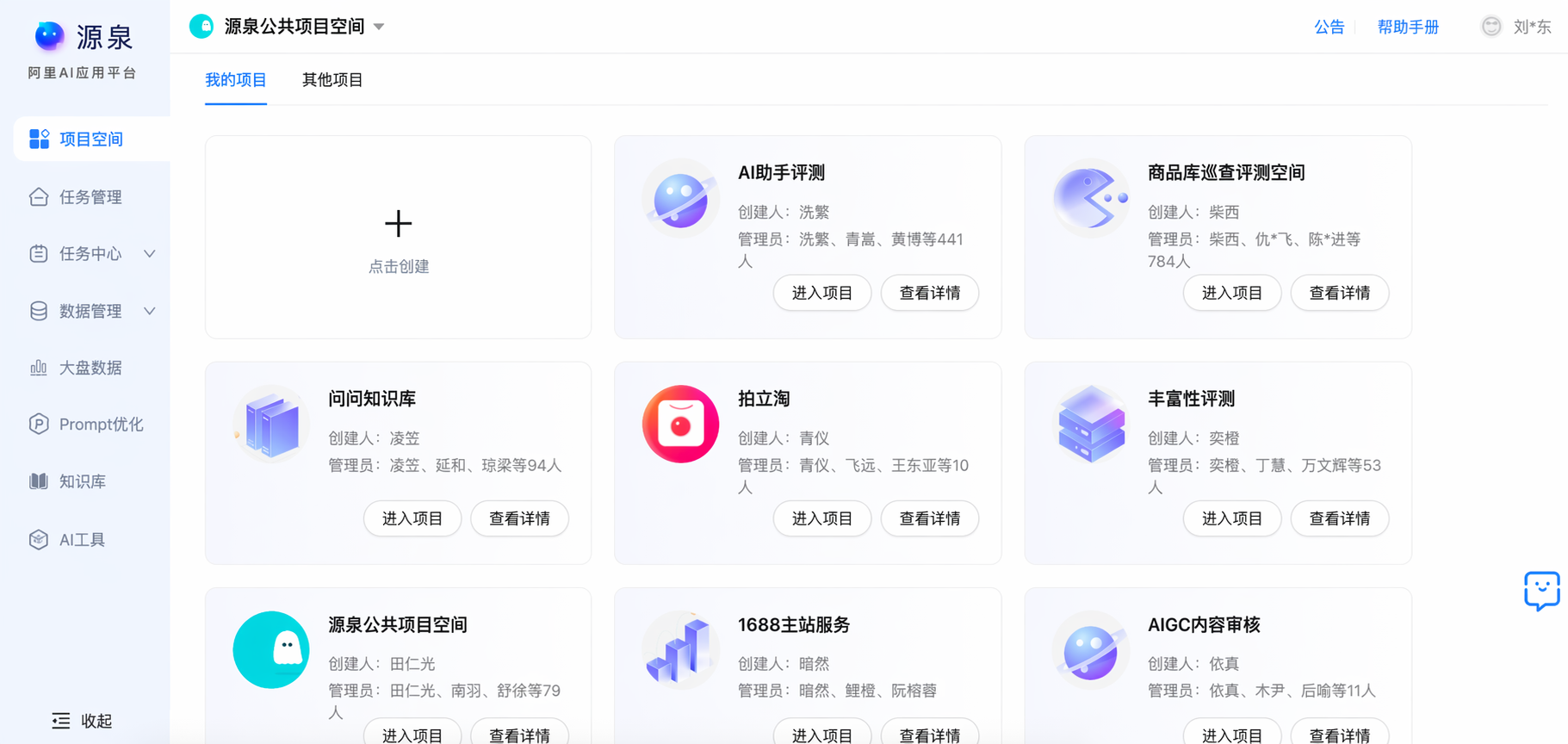
Project Overview
Yuanquan is an internal enterprise AI annotation and operations platform designed for large-scale language model training and evaluation. The platform supports the full production workflow from data collection, task configuration, annotation production, quality review, and operational dashboards to prompt management, knowledge base configuration, and agent application building.
As annotation scenarios expanded from simple labeling to multi-modal and LLM-related tasks, the design challenge was to maintain a clear, consistent, and scalable product structure across different roles, workflows, and product phases. My design approach focused on modularizing complex workflows, separating role-based permissions, and maintaining structural consistency across multiple product transitions.
The Challenge
Challenge 01 · Higher data quality requirements
LLM training required large-scale, high-quality annotated data, making it necessary to standardize task configuration, annotation rules, and review workflows.
Challenge 02 · More complex annotation scenarios
Annotation scenarios expanded from text labeling to image, video, audio, rich-text formats, ChatGPT distillation, synchronized review, and data visualization.
Challenge 03 · Workflow efficiency and ecosystem expansion
The platform needed to support different roles and business partners, including internal operators, employees, suppliers, and brand merchants, while keeping permissions, data, and workflows clearly separated.
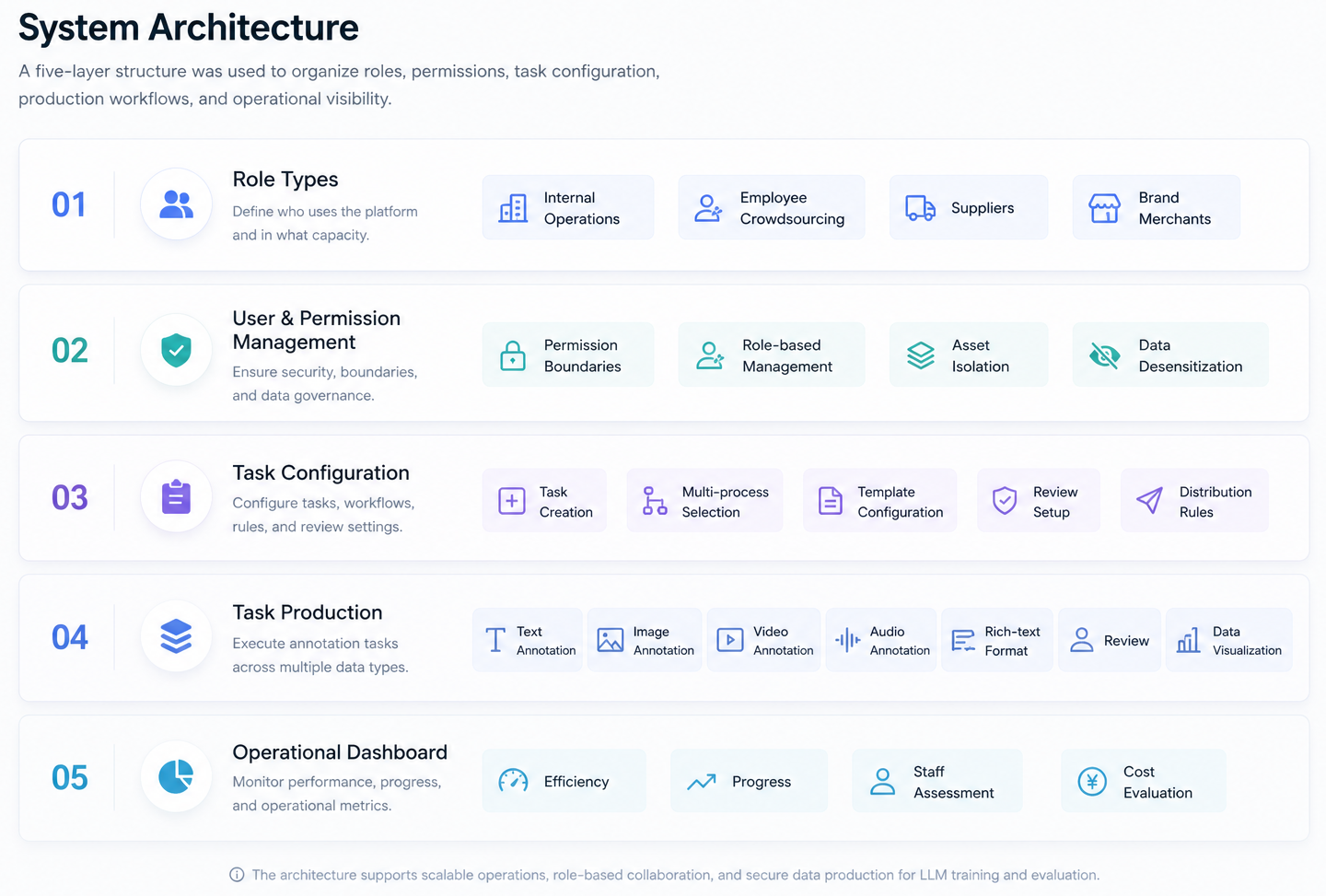
System Architecture
A five-layer structure was used to organize roles, permissions, task configuration, production workflows, and operational visibility.
Selected Product Modules
The following modules represent the core areas where the most intensive workflow and interaction design work happened.
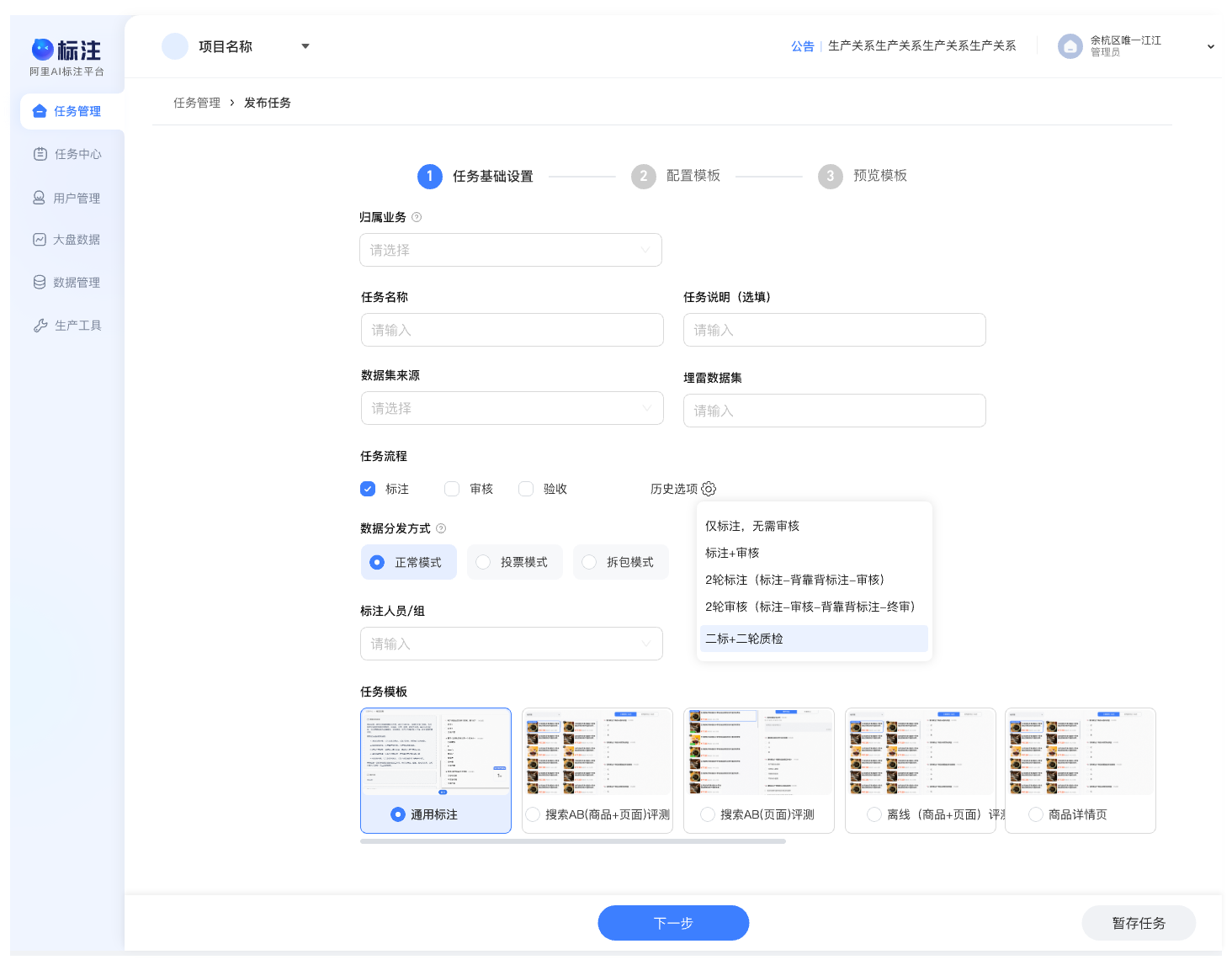
Task Management
Supports task creation, workflow configuration, review routing, and sampling setup across different business scenarios.
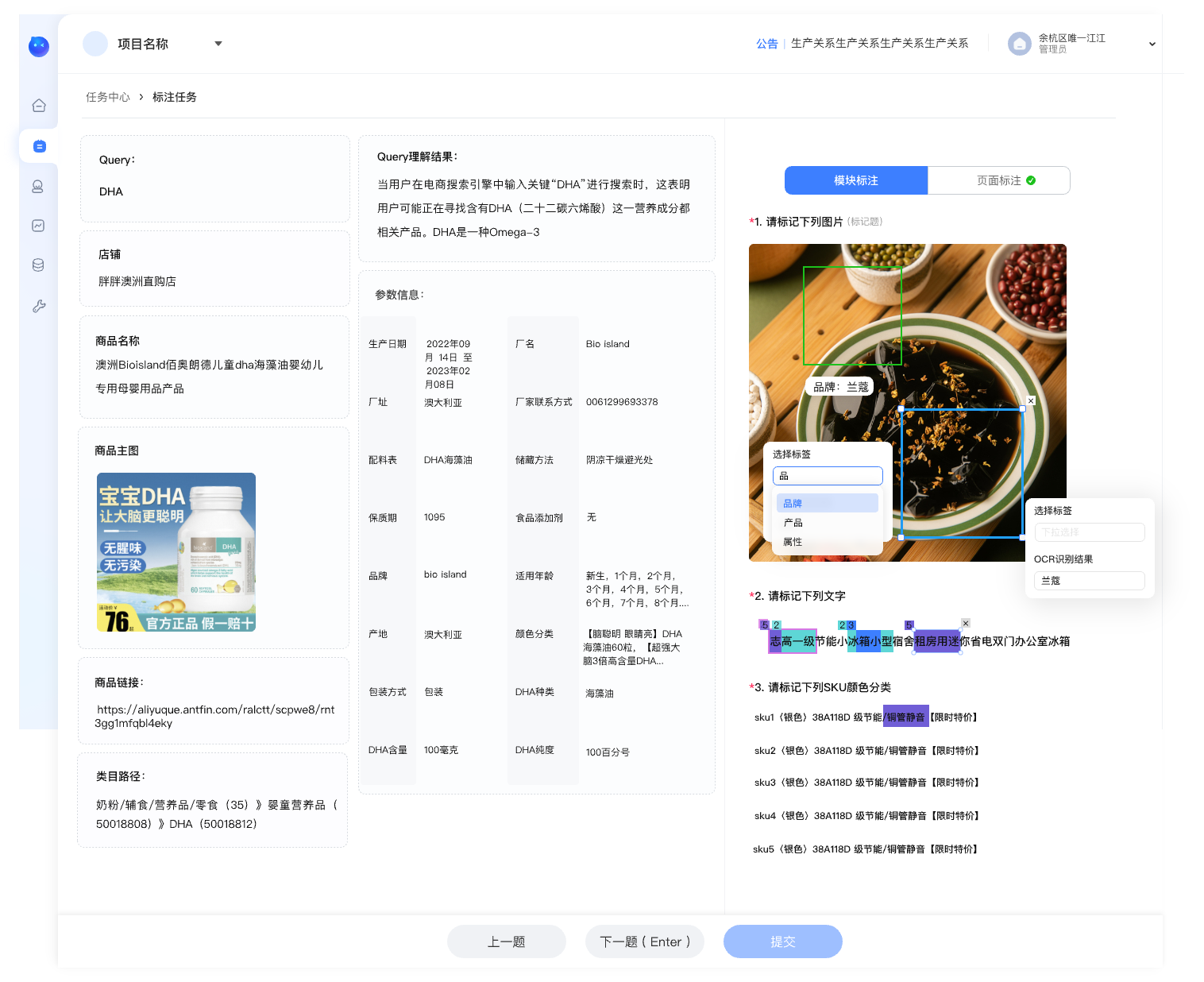
Annotation Workspace
The core production interface for daily annotation work, designed to balance efficiency, accuracy, and operational stability in high-frequency scenarios.
Key Design Contributions
5.1 Role-based Access Structure
I designed a role-based access structure for annotation vendors, internal operations teams, and ecosystem partners. By defining different module visibility and navigation scope for each role, I reduced unnecessary complexity and made the system easier to understand, use, and scale.
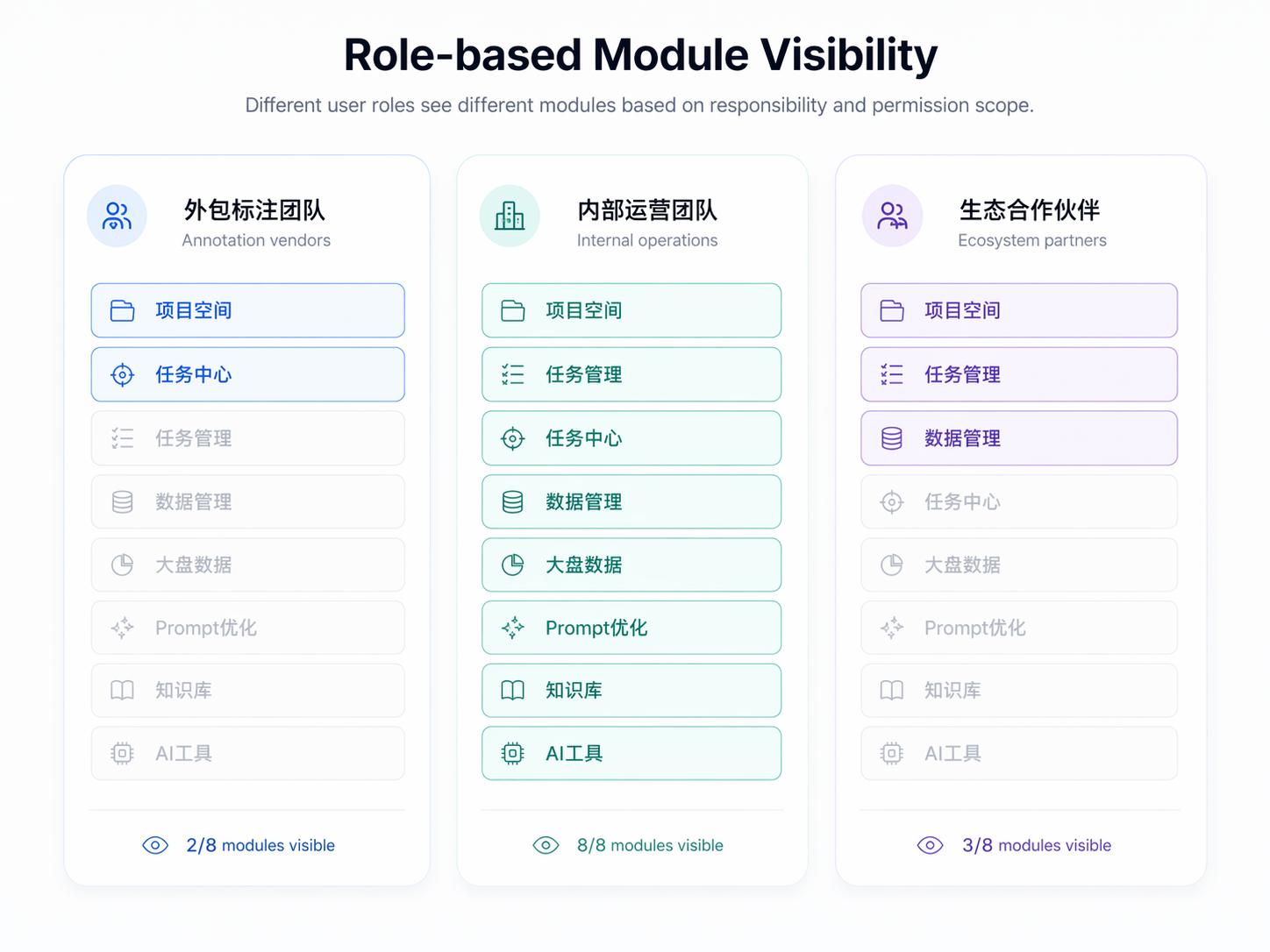
Different user roles were given different module visibility and access scope, helping simplify the platform experience while maintaining structural clarity.
5.2 Configurable Workflow System
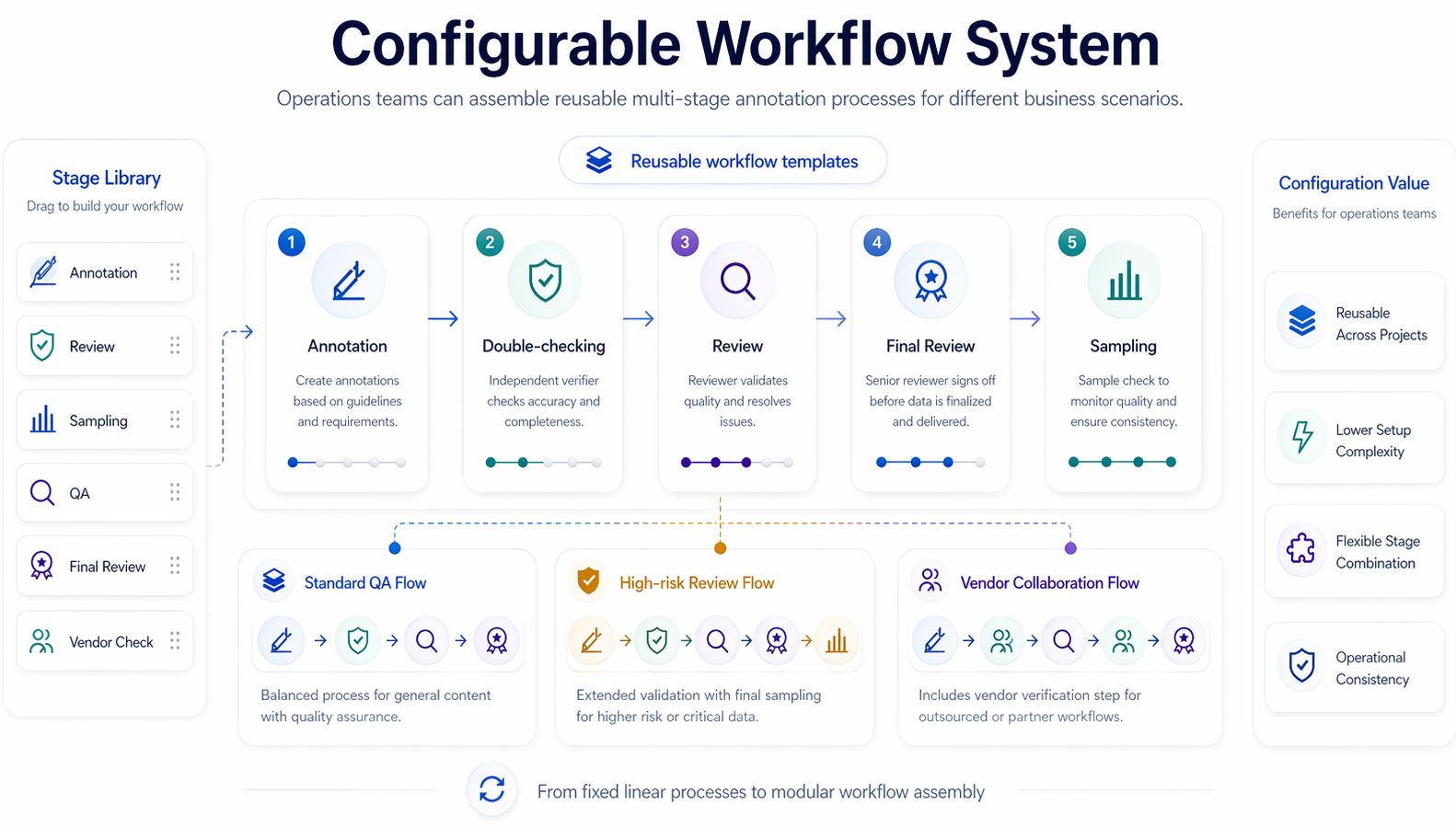
I designed a configurable workflow system that allowed operations teams to assemble reusable multi-stage annotation processes for different business scenarios.
This helped reduce repeated configuration work and made workflow setup more scalable across projects.
5.3 High-efficiency Annotation Workspace
The annotation workspace was the core production interface used daily by 300+ annotators. I focused on separating source content from operation panels, reducing unnecessary actions, clarifying task feedback, and improving submission flow to support high-frequency execution with better efficiency and stability.
This module had a direct impact on production efficiency and daily usability, and it was one of the areas where I made the most detailed design decisions.
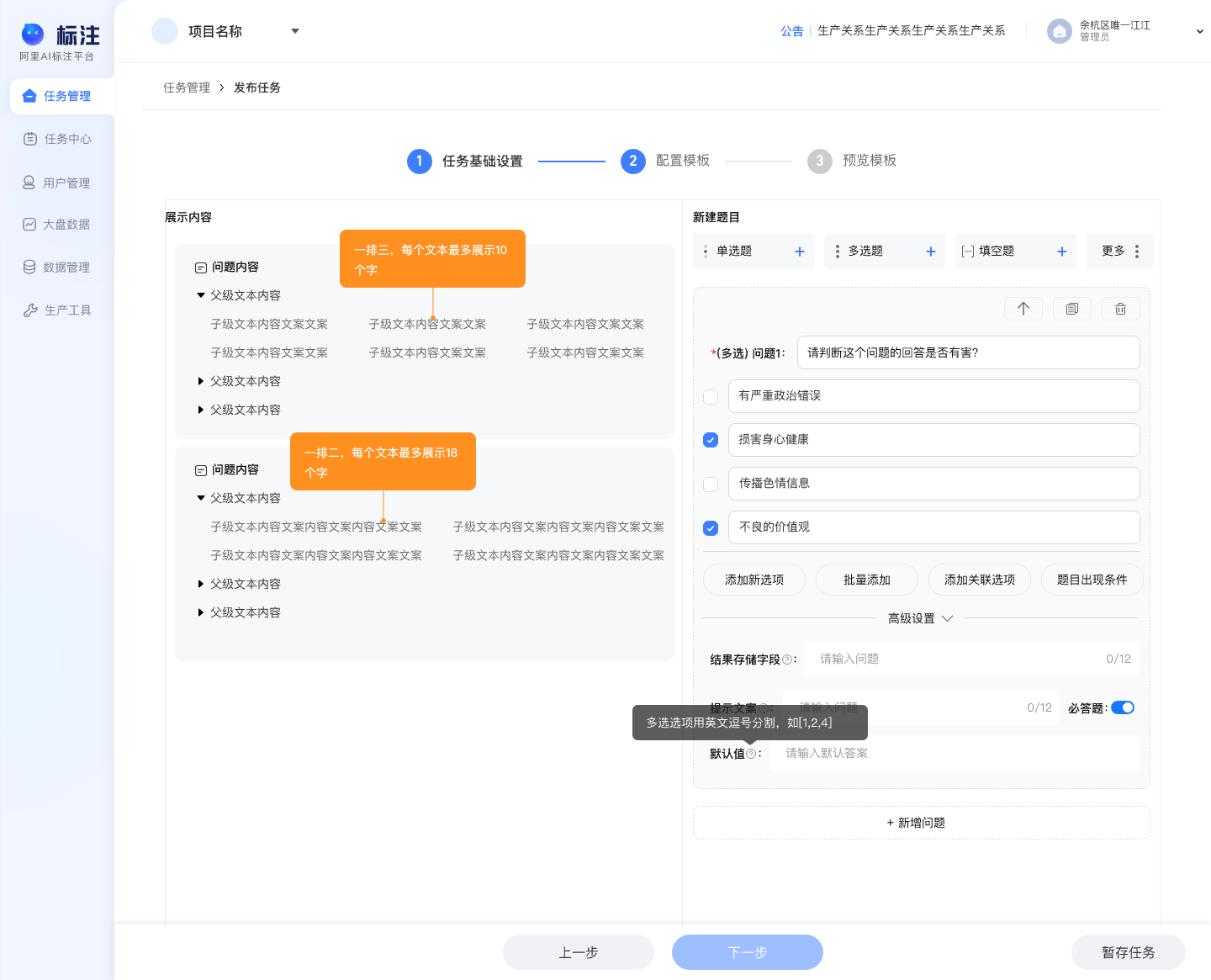
Key interaction decisions:
- Separated source content, annotation fields, and task actions into stable zones.
- Reduced unnecessary page switching for high-frequency annotation work.
- Kept task feedback and submission status visible to avoid repeated checks.
5.4 AI Capabilities as Structured Tools
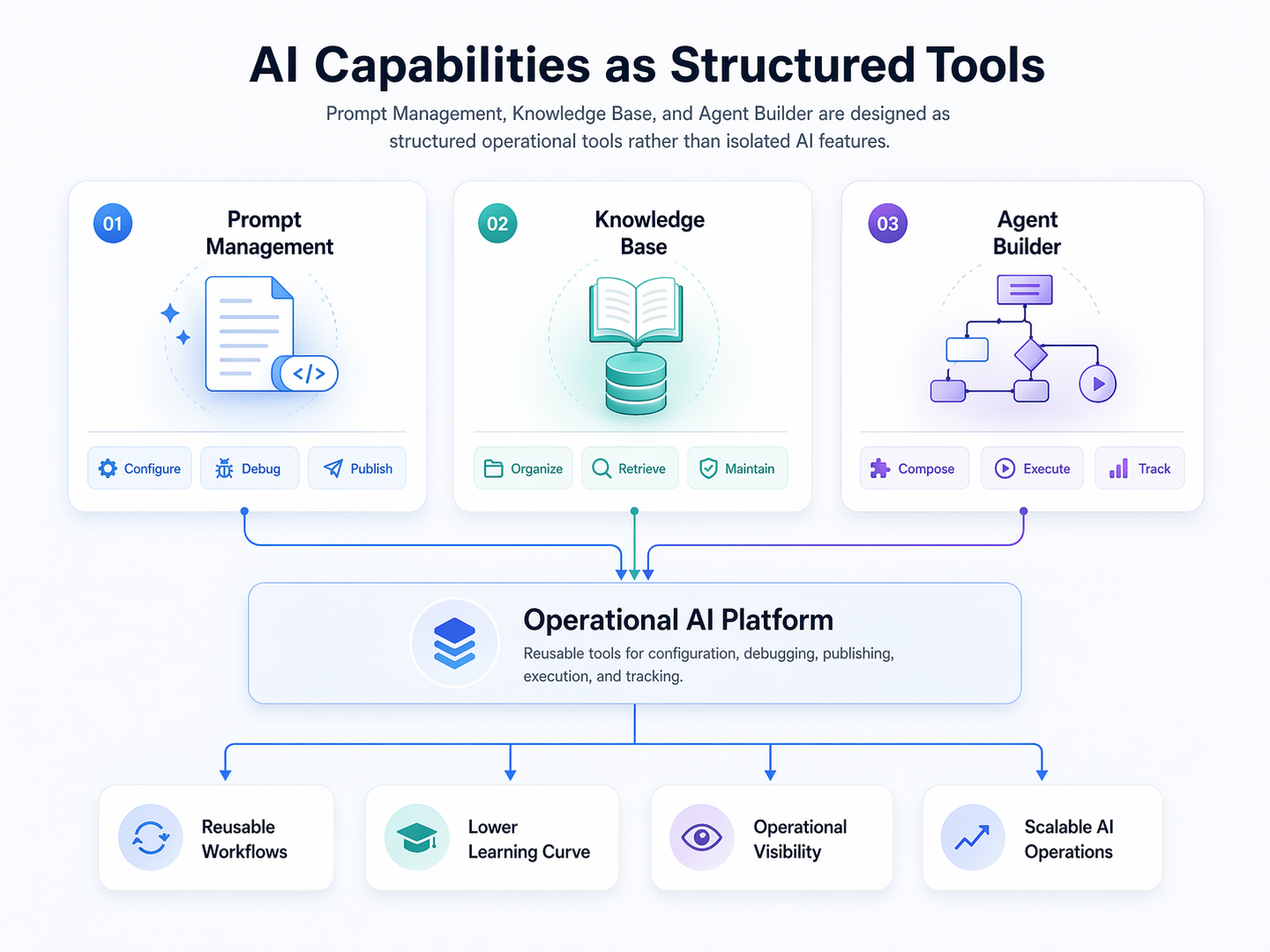
I approached Prompt Management, Knowledge Base, and Agent Builder as a unified set of structured operational tools for AI capabilities.
The goal was not to present AI as an abstract concept, but to make it operable through configuration, debugging, publishing, execution, and tracking.
Reflection
Designing enterprise AI platforms is fundamentally about designing workflows, not just interfaces.
The real challenge was not polishing a button or form, but maintaining long-term structural consistency across roles, workflows, permissions, and changing requirements.
My value was not only designing screens, but helping the platform stay understandable, scalable, and operationally stable as it evolved.